
Online Certificate Course on
Arbitration Law, Drafting, International Practice & AI
Build job-ready expertise in arbitration law, drafting, international practice and AI, fully self-paced, with an RDRC empanelment opportunity
Early Access offer ends in
- 00Days
- 00Hrs
- 00Mins
- 00Sec
Price increases to ₹3,999 after the timer ends
Why Learn Arbitration Now
Arbitration is among the highest-demand legal fields today. With courts actively encouraging arbitration and cross-border disputes rising, trained arbitration professionals are in short supply across law firms, companies, banking and infrastructure.
Core Areas Covered
Six areas, taught across seven modules.
Build your arbitration expertise on your own schedule
Study anytime, early bird or night owl
Replay any lesson, as often as you need
Start today, no batch to wait for
Learn at the pace your schedule allows
Open to anyone
- Law Students (UG & PG)
- Graduates & Young Lawyers
- In-house Counsels
- Banking & Finance Professionals
- Real Estate & Infrastructure Professionals
- Compliance & Contract Professionals
No prior arbitration background required.
Seven Modules, from Foundations to Building Your Practice
7 recorded modules with 6 practical companion booklets, with AI applied throughout and a dedicated AI workflows module.
- Nature and advantages of arbitration vs litigation
- Arbitration Agreement: essentials, scope and validity
- Arbitration & Conciliation Act 1996: key provisions and 2015/2019/2021 amendments
- Domestic vs international commercial arbitration
- Role of institutions: ICC, SIAC, DIAC, MCIA, ICA
- Appointment, challenge and removal of arbitrators
- Jurisdiction of the tribunal: the kompetenz-kompetenz principle
- Conduct of proceedings: pleadings, evidence and hearings
- Interim measures: Section 9 and Section 17 orders
- Fast-track arbitration and emergency arbitrators
- Types of awards: interim, final, consent and ex-parte
- Setting aside awards: Section 34 grounds and limitations
- Enforcement of domestic and foreign awards (New York Convention)
- Public policy challenge and judicial scrutiny trends
- Appeal under Section 37 and Supreme Court jurisprudence
- Drafting arbitration clauses: pathological vs model clauses
- Statements of claim, defence and counterclaim
- Applications: Section 9, Section 11 and Section 34 petitions
- Procedural orders and terms of reference drafting
- Award writing: structure, reasoning and operative part
- Setting up your arbitration workspace
- AI for arbitration legal research
- Drafting arbitration clauses and pleadings with AI
- Contract review and arbitration risk flagging
- Document review and evidence organisation
- Timeline and chronology analysis
- Contradiction detection and cross-examination prep
- Witness preparation and AI-assisted hearing preparation
- Post-award and enforcement analysis
- Arbitration-specific AI prompt library
- Red-flag checklist: hallucinations, confidentiality and privilege
- Implementation roadmap for law firms and legal teams
- UNCITRAL Model Law and its adoption across jurisdictions
- Investor-State dispute settlement (ISDS) and BIT arbitration
- Major institutional rules: ICC, SIAC, LCIA and DIAC compared
- Seat, venue and governing law: strategic considerations
- Enforcing foreign awards in India: Part II of the A&C Act
- How arbitration briefs come: referrals, panels and direct briefs
- Empanelment with institutions: MCIA, ICA, DIAC, eligibility and process
- Specialising by sector: construction, energy, investor-state and commercial disputes
- From junior counsel to arbitrator: mapping the career trajectory
- Internships: where to look, how to apply and what to highlight
- Securing your first brief: cold outreach, mentors and building visibility
- Networking: arbitration bars, conferences, moots and getting noticed
- Career roadmap for arbitration practitioners




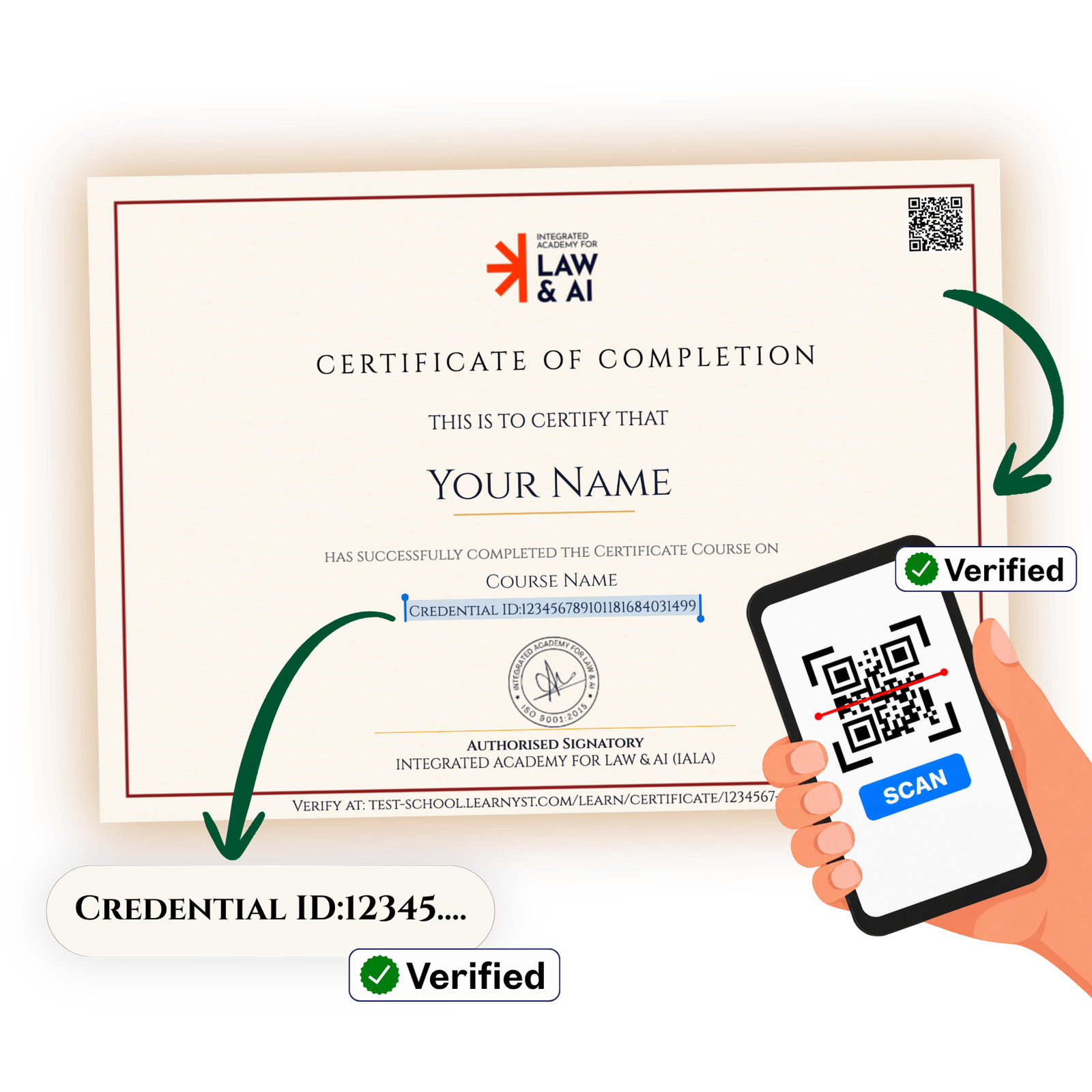
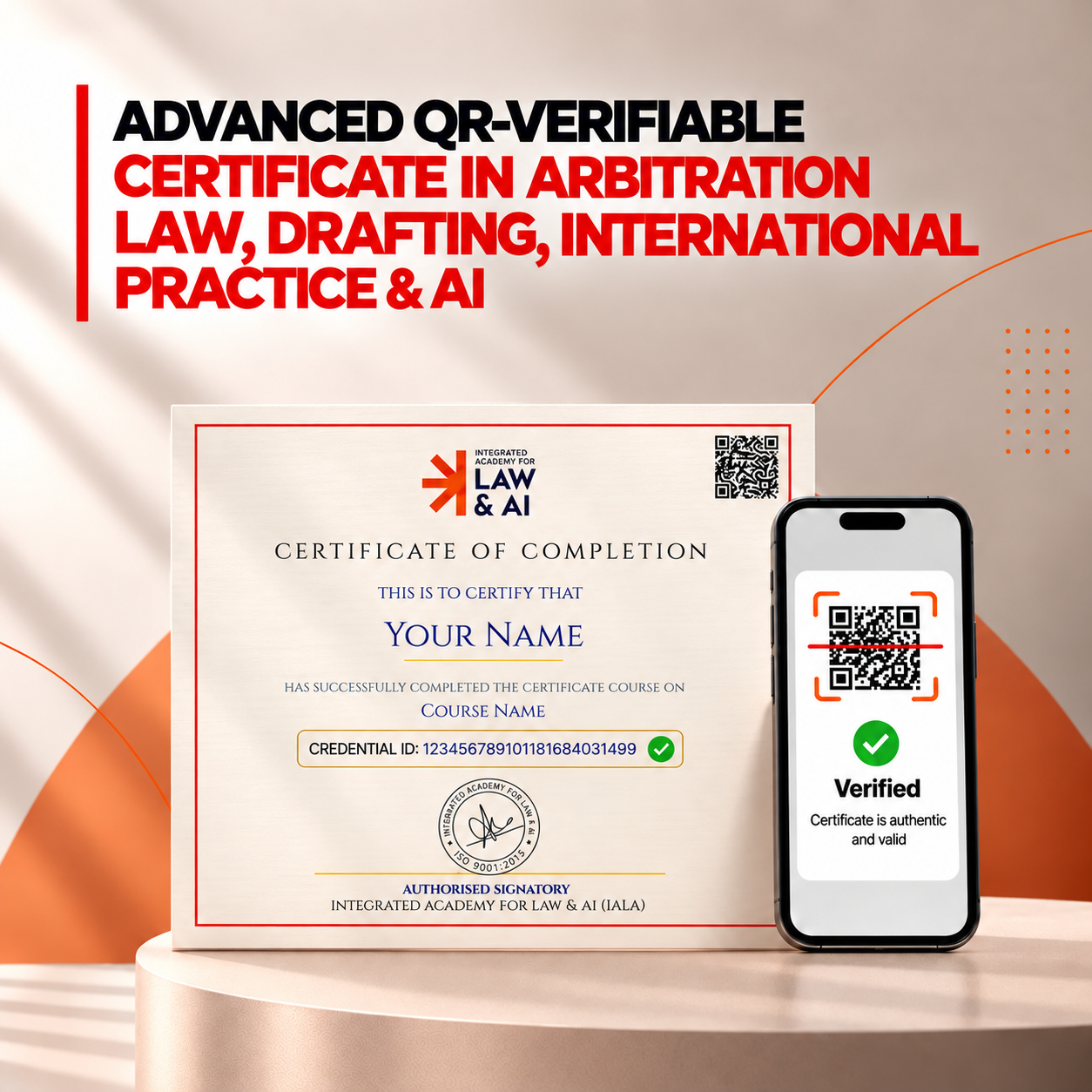
Gain an Advanced
QR-Verifiable Certificate
- Earn your credential of expertise
- Share your verified certificate (QR-verifiable)
- Add certificate to your LinkedIn
On successful completion, participants are eligible to apply for empanelment as Arbitrators, Mediators or Resolvers with RDRC, RESOL Dispute Resolution Center, a dedicated online platform for fast, accessible and affordable dispute resolution.
Step 1
Step 2
Step 3
Step 4
Final empanelment is subject to RDRC’s shortlisting and is not guaranteed.
Everything that ships with the course


Feedback from Learners of Previous Courses
Format
Structure · Companion Booklets
Mode
Access · on enrolment
Choose the plan
that fits you best
Price increases to ₹3,999 after the timer ends
- 00Days
- 00Hrs
- 00Mins
- 00Sec
Advanced [Recommended]
- ₹3,999
- ₹2,999
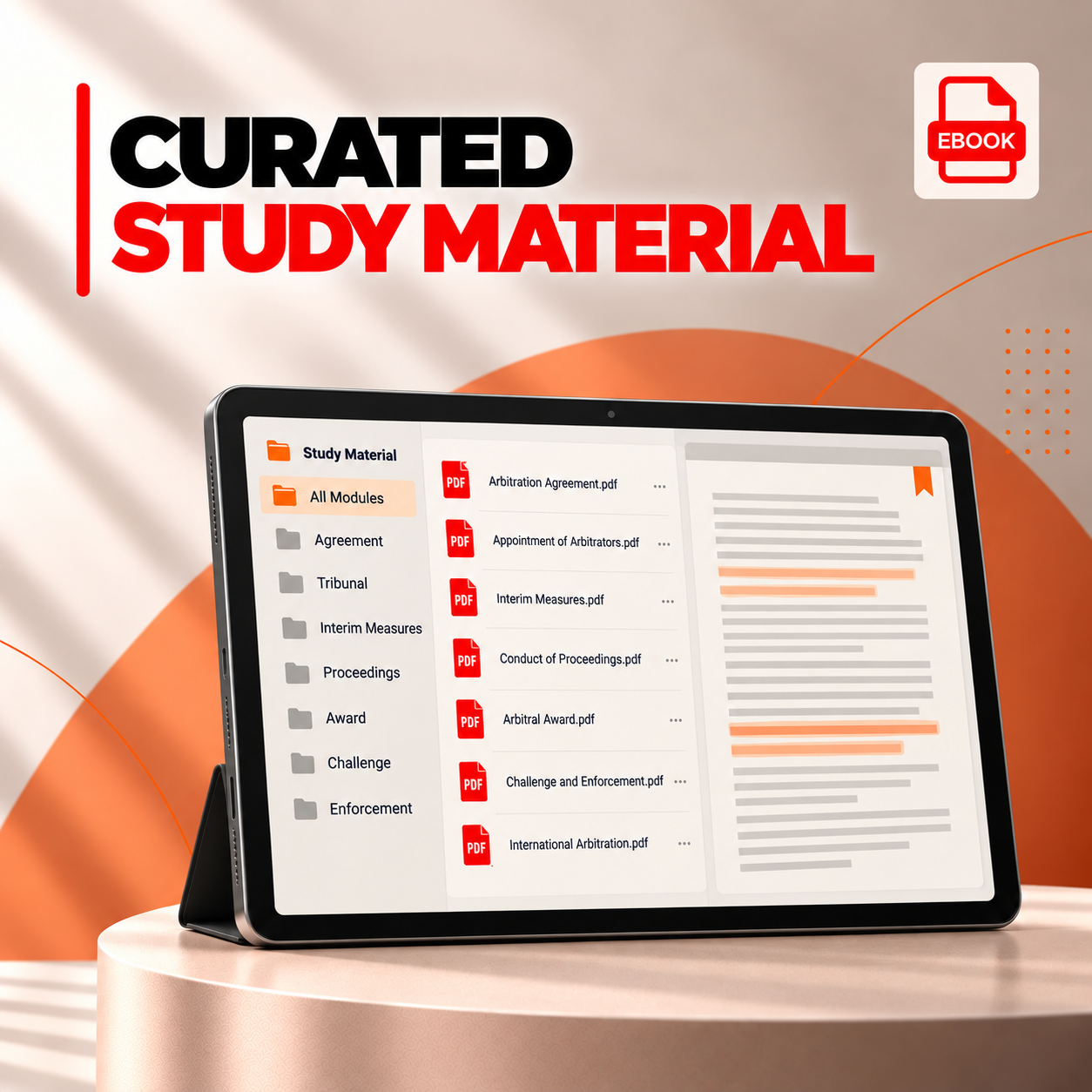
- Curated Study Material
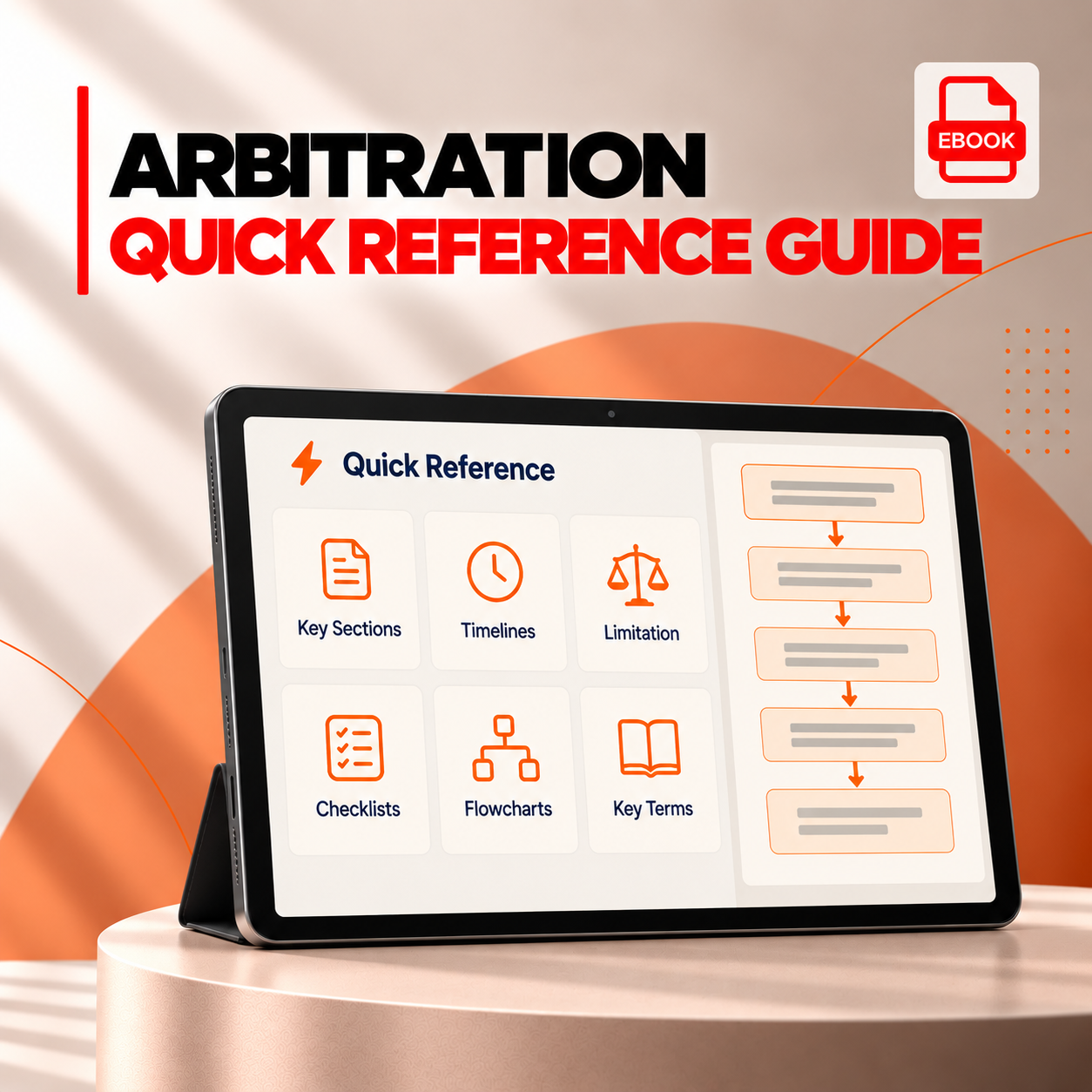
- Arbitration Quick Reference Guide
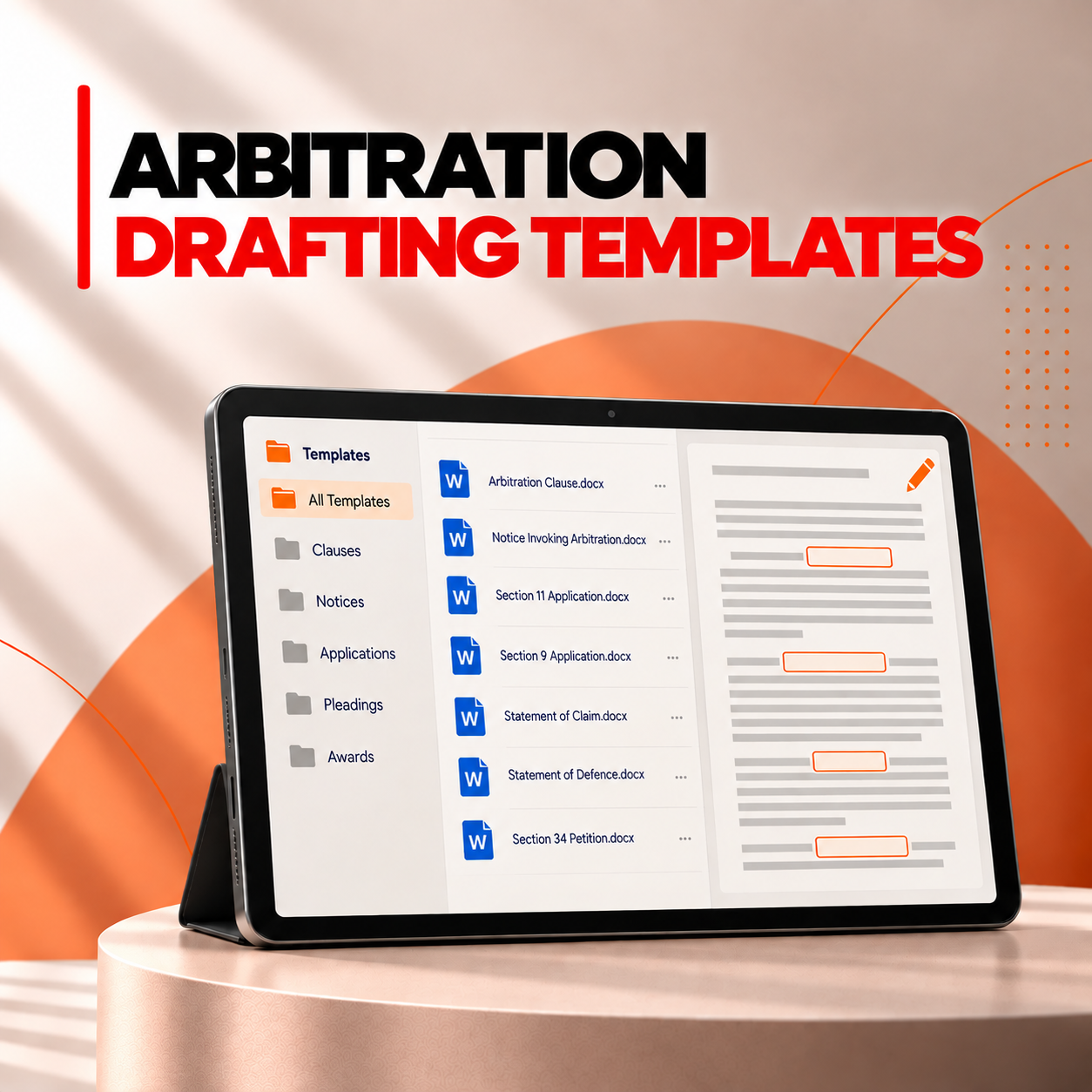
- Arbitration Drafting Templates
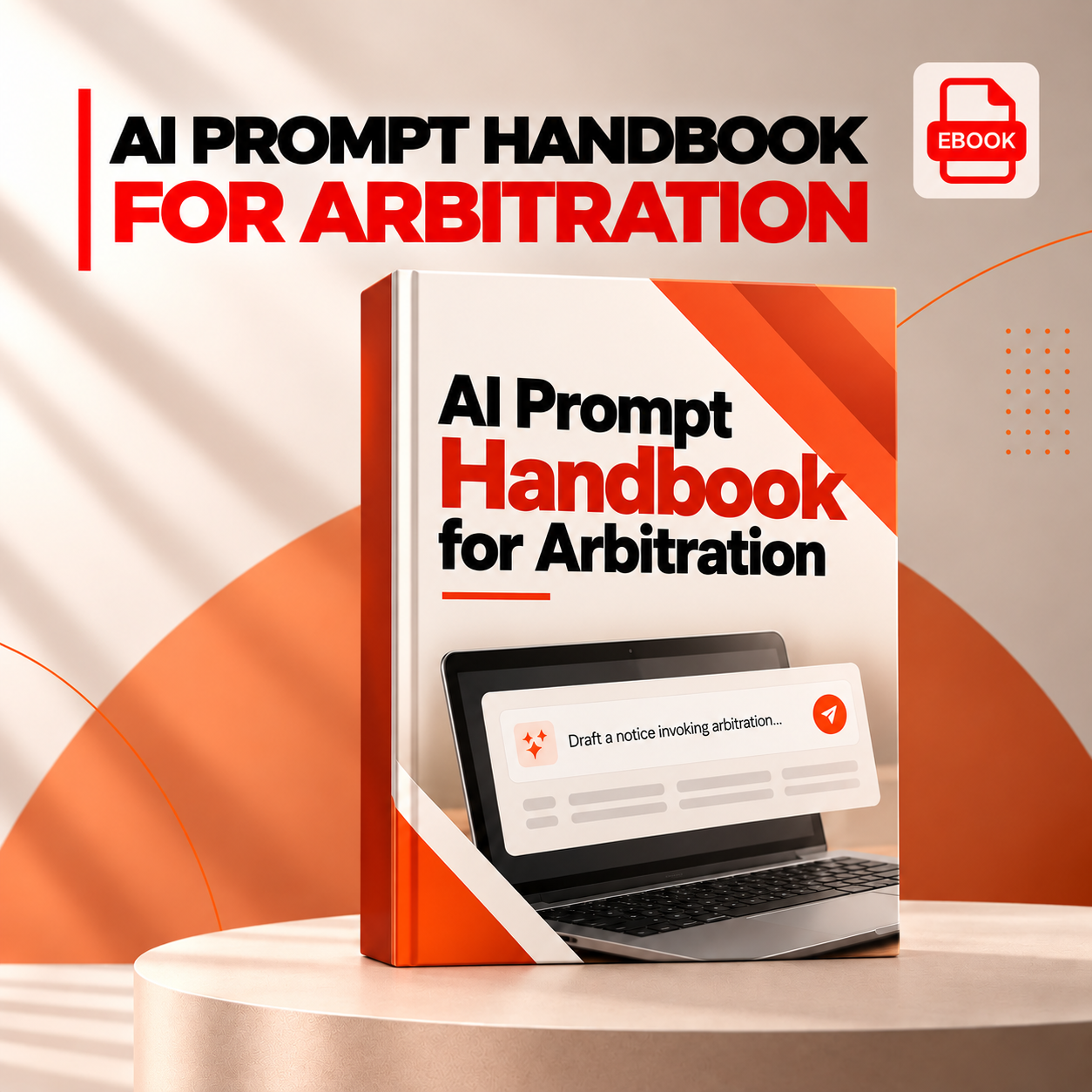
- AI Prompt Handbook for Arbitration
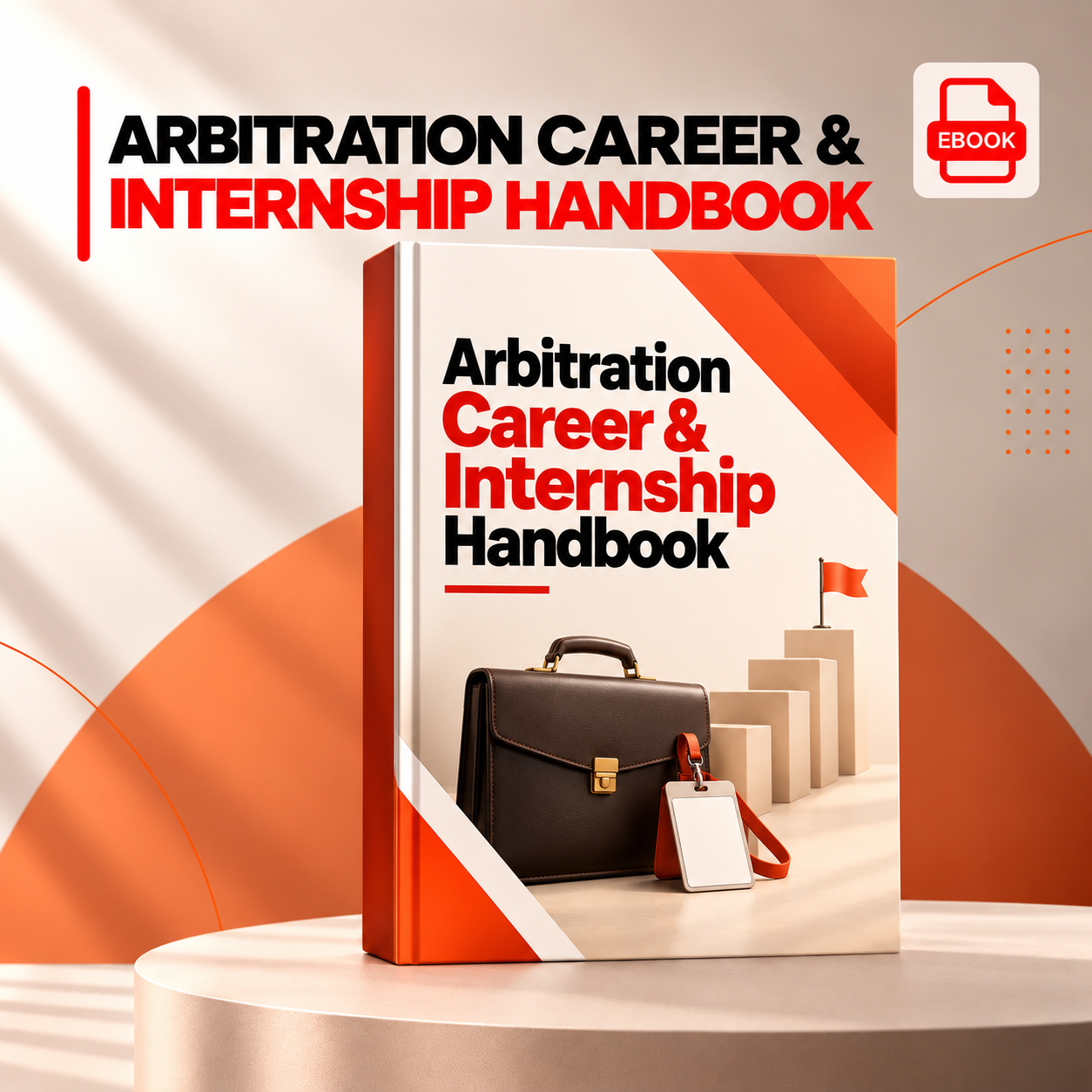
- Arbitration Career & Internship Handbook
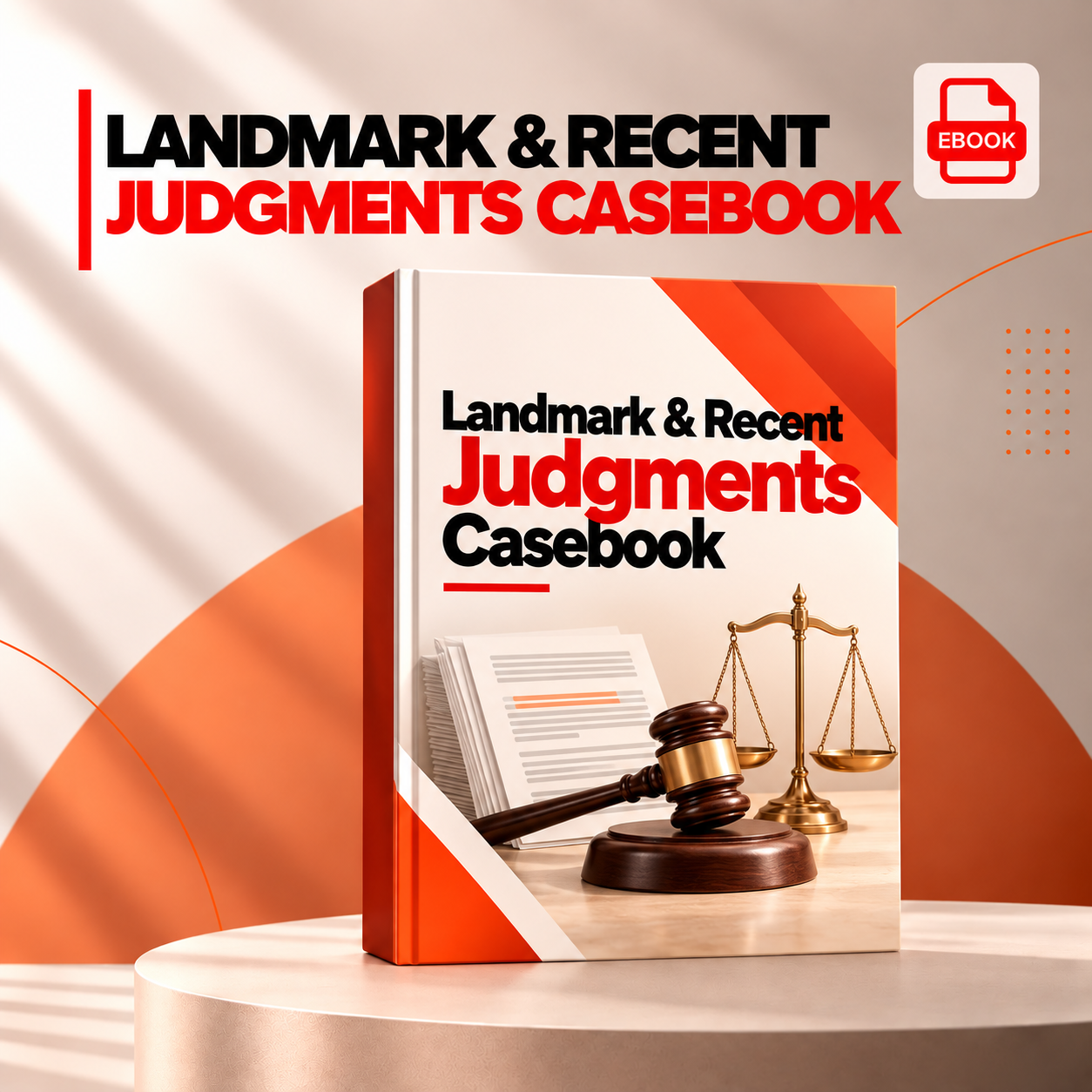
- Landmark & Recent Judgments Casebook
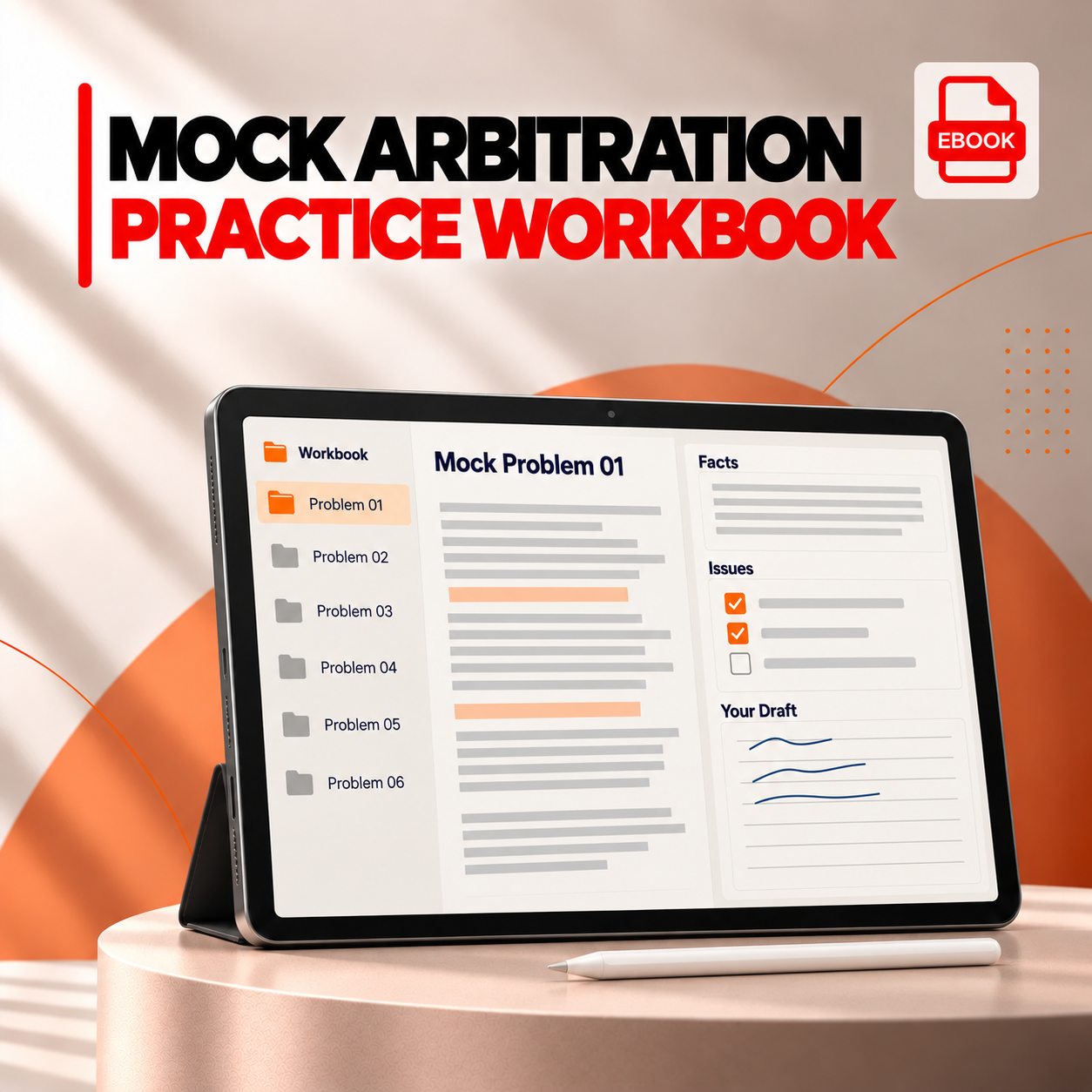
- Mock Arbitration Practice Workbook
- Lifetime Access to Recorded Lectures
- Advanced Certificate from IALA
Basic
- ₹2,999
- ₹1,999
- Curated Study Material
- Arbitration Quick Reference Guide
- Arbitration Drafting Templates
- AI Prompt Handbook for Arbitration
- Arbitration Career & Internship Handbook
- Landmark & Recent Judgments Casebook
- Mock Arbitration Practice Workbook
- 3-Month Access to Recorded Lectures
- Advanced Certificate from IALA
Frequently asked questions
Still unsure? Reach the team below — we reply on email and the student helpline.
Anyone building expertise in arbitration, law students, young lawyers, in-house counsel, and banking, real-estate, infrastructure, compliance and contract professionals. No prior arbitration background is required.
No. It is fully self-paced. All modules are recorded and available the moment you enrol, so you can start immediately and learn at your own pace.
Basic plan participants get 3 months of access to the recordings. Advanced plan participants get lifetime access.
On successful completion, you are eligible to apply for empanelment as an Arbitrator, Mediator or Resolver with RDRC (RESOL Dispute Resolution Center). Final empanelment is subject to RDRC’s shortlisting and is not guaranteed.
No. The course builds from foundations, and every concept, including the AI module, is explained from the ground up.
A dedicated module teaches AI workflows for arbitration, using tools like Claude, NotebookLM, ChatGPT and Perplexity for research, drafting, contract review, document and timeline analysis and hearing prep, with a focus on confidentiality, privilege and verification.
The Advanced Plan includes six practical booklets: the Quick Reference Guide, Drafting Templates, AI Prompt Handbook, Career & Internship Handbook, Judgments Casebook and Mock Practice Workbook, plus curated study material.
Yes. On successful completion you receive an Advanced QR-Verifiable Certificate in Arbitration Law, Drafting, International Practice & AI from IALA.
The Basic Plan (₹1,999) includes 3-month recording access and the certificate. The Advanced Plan (₹2,999) includes lifetime access plus all six companion booklets and the curated study material.
No. The course does not guarantee placement or empanelment, but its practical booklets, career handbook and RDRC pathway are designed to meaningfully strengthen your profile.
Get in touch with our team
For any queries or support around the course, plans or access.